
How to Build a Home Gym You’ll Actually Use
Start with the routine you want to repeat. Let the equipment follow.
By RESEVVOR
Buying guidance: compare the exact model’s current specifications and instructions. This article is not a hands-on product review.
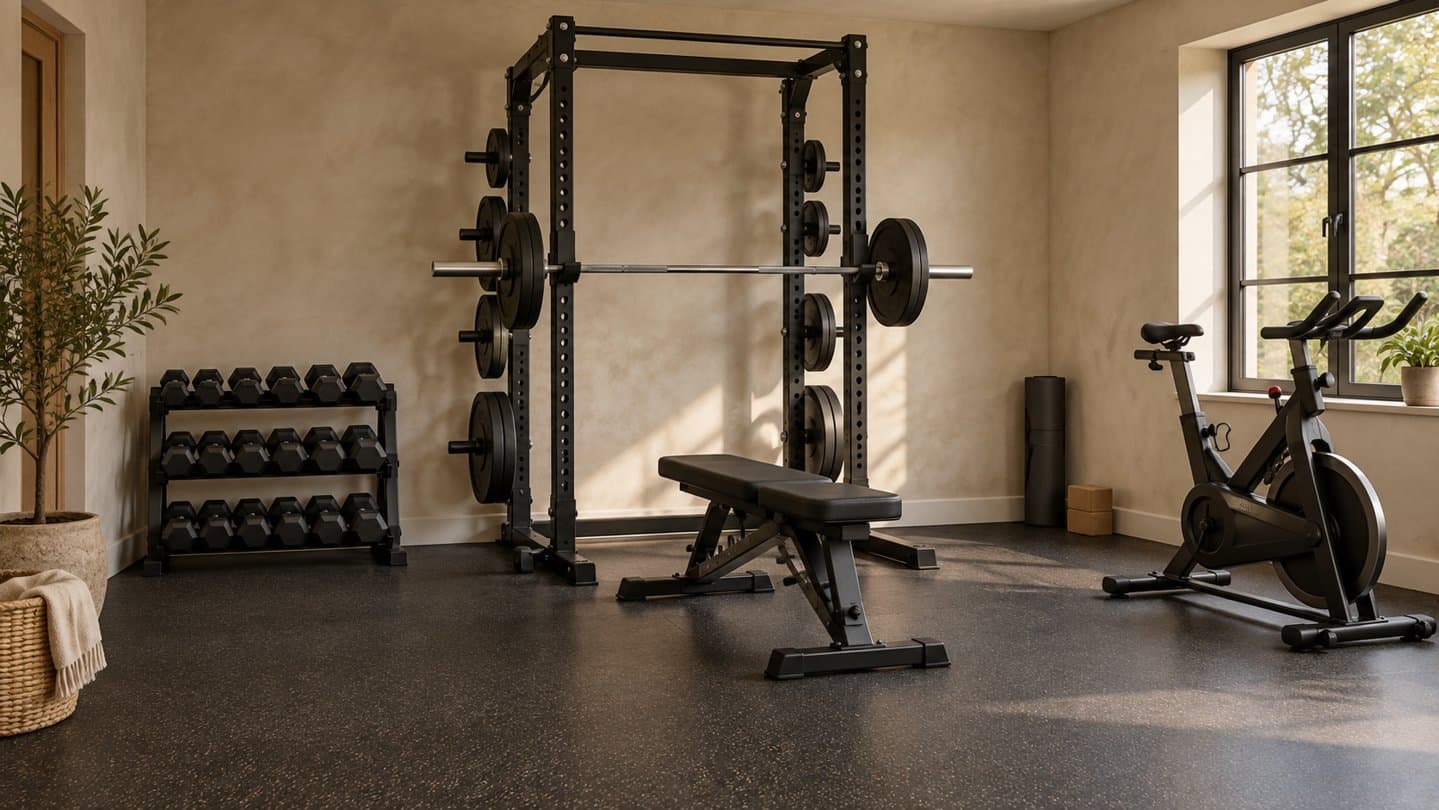
A home gym does not need to look like a commercial gym. It needs to make the next session easy to start. Before filling a cart, decide what you want to do in the room and how often you can realistically make time for it.
Plan your home gym around a normal training week
Picture a regular Tuesday, not an ideal weekend. Where will you train? How long will it take to clear the space? Where will the equipment go afterward? A setup that takes ten minutes to unpack is a different proposition from one that is ready when you are.
Write down the activities you already enjoy or intend to practice. Strength sessions, floor work and conditioning ask different things of a room. Start with the equipment needed for that short list, rather than trying to cover every possible workout.
Choose your first home-gym equipment
- Choose one activity to support first.
- List the equipment that activity actually requires.
- Choose a storage location before choosing an additional piece.
- Keep a clear area for movement and transitions.
For some people, a set of weights and open floor space will be enough to begin. Others may prefer bands that can be put away between sessions. Neither choice is automatically better: compare the setup time, exercise options and storage demands against your own routine.
Plan home-gym storage for a shared room
Shared rooms need a reset plan. A bench that folds still needs somewhere to go; a carry bag still needs a shelf. Think through the path from storage to use, including doors, furniture and anything that must be moved each time.
Keep the equipment you use most accessible. If the room must return to living-room duty after a session, make that part of your buying decision. The footprint in storage and the footprint during use are separate measurements.
Buy the next piece for a reason
Use the first setup long enough to notice what is missing. An additional weight range, a more convenient adjustment mechanism or a dedicated bench should solve a specific problem. Avoid buying a second piece simply because the room looks unfinished.
Before committing, review the exact product specifications, instructions, warranty and return terms. A product shortlist is a starting point for comparison, not a claim that every product has been tested.
A starter home-gym checklist
Write a purchase list for one ordinary week of training. For strength, identify the loading options and exercises you want to support; for conditioning, decide whether a machine or open floor space better fits your sessions. Set aside part of the budget for storage, delivery and any required installation.
Test the setup before expanding it. If you spend more time clearing furniture than training, fix the room arrangement first. Add equipment when it unlocks a movement, a useful weight increment or a session you already want to repeat.
Measure your home-gym working area before choosing equipment →