
How to Build a Game Room That Doesn’t Look Like a Rec Room
Treat the games like furniture, edit the palette and give the room somewhere for the eye to rest.
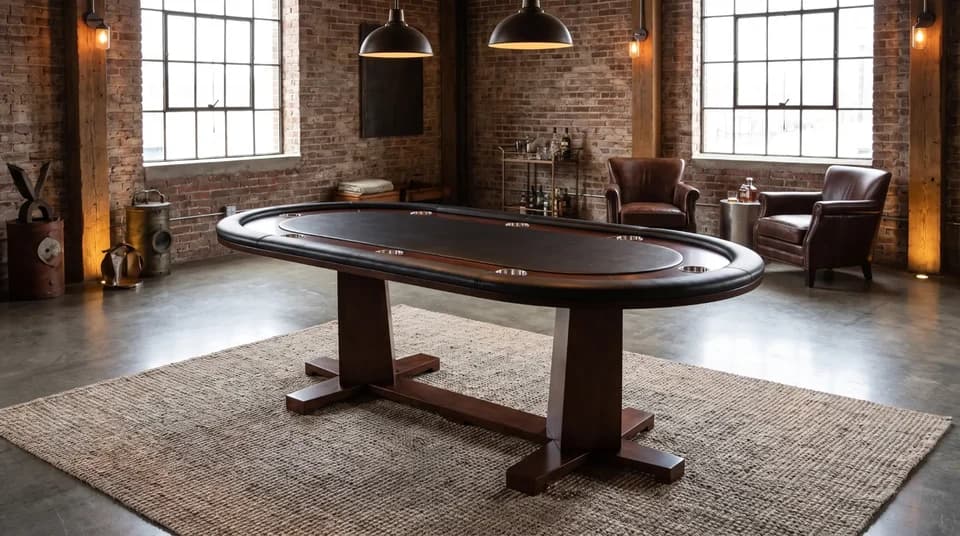
The fastest way to make a game room feel chaotic is to let every product bring its own visual language. Logos, bright graphics, different wood tones and oversized furniture can pile up quickly. The answer is not to make the room boring. It is to decide what gets to be loud.
Choose one visual anchor
Let the largest or most distinctive game lead the room. If the pool table is the anchor, other pieces can be quieter. If a retro arcade cabinet is the personality piece, the surrounding furniture can be simpler.
Repeat finishes
A few repeated materials can make unrelated games feel like they belong together. Black metal, warm wood, smoked glass or one upholstery family can create continuity without requiring a matching furniture set.
Use lighting as a unifier
Layered lighting can make the room feel intentional after dark. Combine practical light over the games with softer ambient light elsewhere, and avoid relying on one bright ceiling source to do everything.
Give the room negative space
Not every wall needs another game. Open floor area improves circulation and gives larger pieces visual breathing room. A room with three well-chosen activities often feels more finished than a room with six pieces fighting for attention.
Keep the grown-up stuff grown-up
Storage for cues, paddles, cards, remotes and accessories matters. When the small stuff has a home, the games can stay playful without the entire room reading as cluttered.