Why Train Your Neck? Balance, Strength and What the Research Says
Most workouts skip the neck, yet it helps your body know where it is in space. Here’s what we know, what researchers have studied, what’s still unknown, and four ways to train your neck at home.
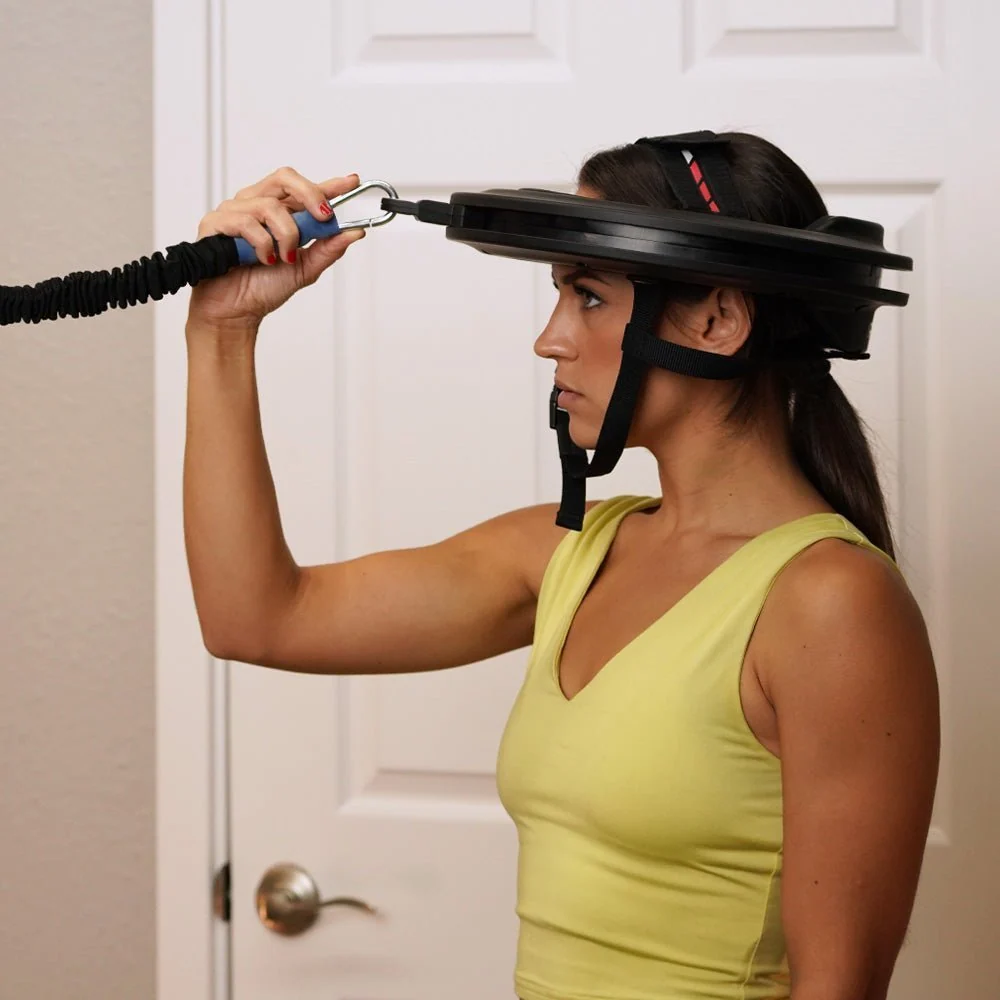
Photo: Iron Neck / Product photography
People train balance with wobble boards, single-leg deadlifts and one-foot holds. There’s a part of the system almost nobody trains on purpose: the neck. Fighters, football players and race car drivers have trained their necks for years. Here’s why the rest of us might want to, and what the research does and doesn’t show.
Your neck is part of your balance system
Your sense of where your body is in space comes from three places working together: your inner ear, your eyes, and sensors in your muscles and joints. The small muscles at the base of your skull are packed with those sensors. They tell your brain which way your head is pointing, so it can make sense of everything your eyes and inner ear report. It’s one reason a stiff or injured neck can leave people feeling dizzy or unsteady.
What we know
- The neck is one of the body’s key balance sensors, alongside the inner ear and the eyes.
- Neck strength drops with age, by roughly 35 to 45% between ages 20 and 60. In one study, adults aged 60 to 89 were slower than young adults to fire their neck muscles when they were pushed off balance.
- Training can make necks stronger. In a 2021 review, two of the three training studies it found measured stronger necks afterward.
- For people who already have ongoing neck pain, physical therapy guidelines include exercise, including strengthening, as a standard part of treatment (American Physical Therapy Association neck pain guidelines, 2017).
What researchers have studied
Most neck research so far has been about concussions in young athletes. Here’s what the main studies set out to learn, what they found, and what their authors concluded.
Does neck strength predict concussions? A 2014 study measured the neck strength of about 6,700 high school soccer, basketball and lacrosse players, then tracked concussions. Athletes with stronger necks had fewer: each extra pound of neck strength went with about 5% lower odds of a concussion (Collins and colleagues, Journal of Primary Prevention). The authors suggested neck strength could be a way to screen athletes, and possibly something to train, but the study didn’t test any training.
Does the same hold in rugby? A study of 43 high school rugby players in Australia measured neck strength before the 2023 season. Eleven players were concussed during the season, and they had weaker muscles at the back of the neck. The authors suggested neck testing could flag players for strengthening programs. It was one school and a small group, so it needs repeating in larger studies (Leung and colleagues, Journal of Science and Medicine in Sport).
Read about the high school rugby study (Journal of Science and Medicine in Sport) →
Can a training program make a difference? A 2024 study put 162 college athletes through about ten minutes of neck stretching and band exercise with a neck training device, three times a week for 12 weeks. Every team got stronger in at least one direction, though the study reported this as statistical significance rather than in pounds or percent. The school also had its lowest rate of head and neck injuries on record that season. The authors called the program effective, but there was no comparison group, only earlier seasons, so it can’t show the training caused the drop. They called for controlled studies (published in the journal Cureus).
Put together: stronger necks and fewer concussions tend to go together, and training builds neck strength. What hasn’t been shown is that training your neck prevents concussions. The 2021 review reached the same conclusion. No exercise or piece of equipment, including the ones below, can prevent a concussion, and neck training is no substitute for proper protective gear, good technique and your sport’s safety rules.
What researchers still want to know
- Does training the neck improve balance, or lower the risk of falls as we age?
- Does it lower concussion risk when trained athletes are compared with athletes who don’t train?
- How much training, and what kind, makes a difference?
Some of this is being tested now. One registered clinical trial is comparing balance training alone with balance training plus neck strengthening in older adults.
See the neck strengthening and balance trial (ClinicalTrials.gov) →
Who it makes sense for
- Everyday exercisers, lifters and runners who already work on balance and want to cover the part most programs skip.
- Desk workers who carry tension in their neck and shoulders.
- Older adults building strength and balance, with their doctor’s OK first.
- Contact and collision sports: football, lacrosse, hockey, rugby and wrestling.
- Combat sports: boxing, MMA and Brazilian jiu-jitsu.
- Motorsport and cycling, where your neck holds your head steady for a long time.
- Youth athletes, with a coach or parent guiding the program.
If you’ve had a concussion, whiplash or neck injury
Talk to your doctor or physical therapist before doing any neck training, and don’t use resistance equipment, including the Iron Neck, unless they’ve cleared you. When neck work is part of rehab, a clinician who knows your history should guide it.
Four ways to train your neck
No equipment. Press your hand against your forehead, the back of your head and each side, and hold against it without letting your head move. It is free, easy to control, and the right place to start.
Resistance bands. Lie face down on the floor with a light band around the back of your head, and hold both ends of the band down against the floor with your hands. Slowly lift your head against the band, then lower it. You can hold briefly at the top or do slow reps. Keep the band light, move slowly, and stop if anything hurts.
A weighted harness. A strap cage sits on your head and holds a light weight plate as you nod forward and back. It is a simple way to build strength, but it only trains one direction.
The Iron Neck. A padded halo sits on your head with a band running to a door or rack. Because the halo turns freely, you can move against the band forward, back, side to side and in circles, so every direction gets trained. It fits with an air bladder and swappable pads, and comes with door and rack anchors.
Iron Neck 3.0 vs. 3.0 Pro
Both use the same halo, band and anchors. The difference is turning. On the 3.0, your head turns freely while the band pulls. The 3.0 Pro adds a friction dial, so turning your head takes effort too, from no resistance up to heavy. Turning strength is the part most neck training misses, which is why contact and combat athletes tend to choose the Pro. For general neck strength, the 3.0 covers it.
How to start
- Go light. Neck muscles are small, so start with the lightest band or plate and short sets.
- Move slowly and stay in control. No jerking or bouncing.
- Train two or three times a week, after your main workout.
- Stop if anything causes pain, dizziness or headache, and see a doctor.
This article is general information, not medical advice. The Iron Neck is a training tool, not a medical device, and isn’t meant to diagnose, treat or prevent any injury or condition. If you have a head, neck or spine injury or any health condition, talk to your doctor before you start.
Sources and further reading
How your body senses where it is in space:
Proprioception: what it is and how it works (Cleveland Clinic) →
Balance disorders and how the balance system works (National Institutes of Health, NIDCD) →
Dizziness and neck pain: how the neck feeds the balance system (Frontiers in Neurology, 2025) →
The studies in this article:
Neck strength and concussions in 6,704 high school athletes (Journal of Primary Prevention, 2014) →
A 12-week neck training program in 162 college athletes (Cureus, 2024) →
The neck muscles and head injuries from falls in older adults (Frontiers in Medicine, 2019) →
Neck pain clinical practice guidelines (American Physical Therapy Association, 2017) →
Balance training with and without neck strengthening in older adults (ClinicalTrials.gov) →
