
Iron Plates vs. Bumper Plates: Which Belongs in Your Home Gym?
A plain comparison of iron and bumper plates, and how your lifting, floor and bar decide between them.
By RESEVVOR
Based on RESEVVOR’s catalog and buying guides. Check current specifications before buying.
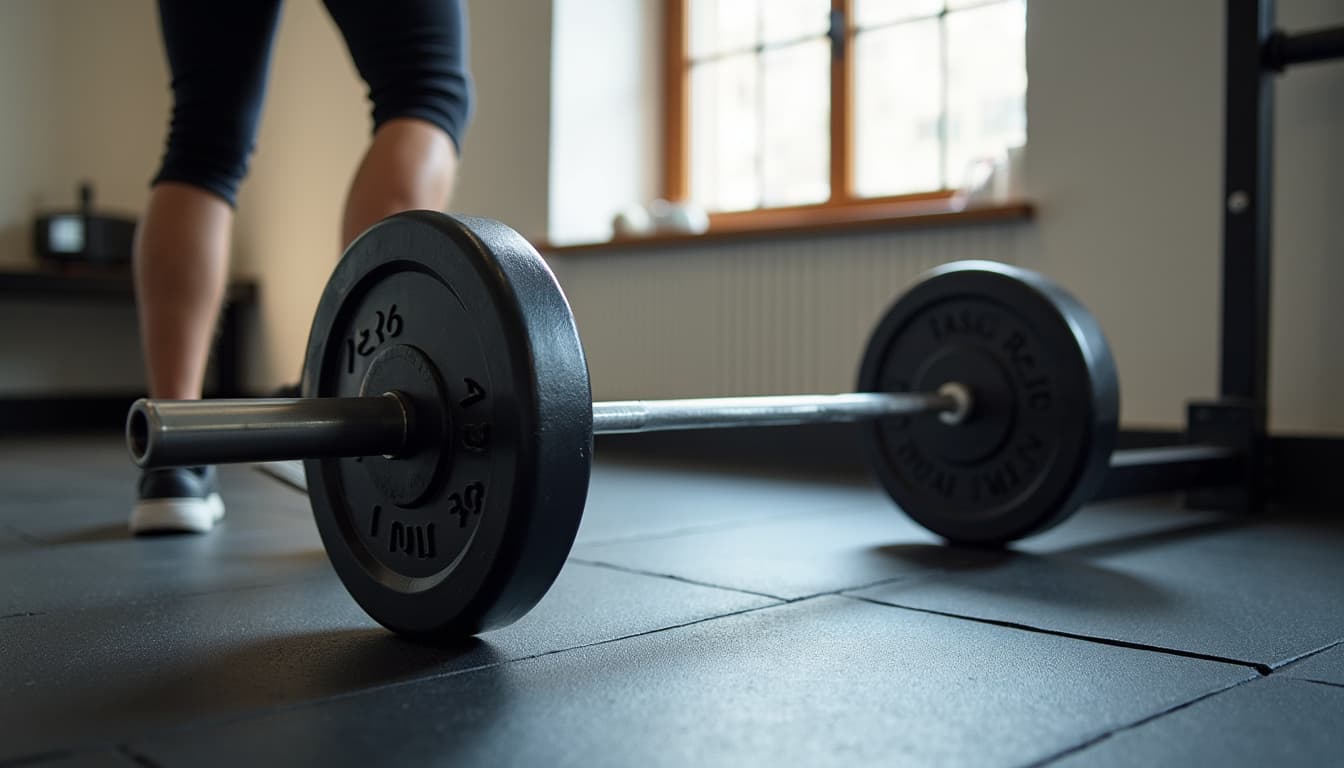
Choose iron plates if your lifting stays on the rack and the bench, and choose bumper plates if you plan to drop the bar from overhead or from the hip. Most home gyms built around squats, presses and controlled deadlifts are well served by iron, and bumpers earn their place only when the bar is going to hit the floor on purpose.
That is the whole decision in two sentences. The rest of this article is about the details that make it less obvious than it sounds, mostly your floor, your bar and your habits.
What each plate is actually for
An iron plate is a hard, dense disc of metal. It is compact for the load it carries, it does not change shape, and it is designed to be lowered, not thrown. A bumper plate is built around a similar idea of load, but wrapped in rubber so that it can be dropped without wrecking itself, the bar or, within reason, the floor underneath.
Neither is better in the abstract. They are tools for different kinds of lifting, and the useful question is which kind of lifting you will really do in the room you have.
Where iron plates make sense
Iron suits the lifter whose bar travels between a rack, a bench and the hands. Squats, bench press, overhead press done from the rack and deadlifts that are set down rather than dropped all fit comfortably. Because iron is generally slimmer per unit of load than rubber-coated plates, you can usually fit more on a bar, which matters if you expect to progress.
Iron is also the more traditional look, and many people simply like it. If you are shopping that route, the Cast Iron Machined Weight Plate Pairs are a straightforward place to start, and the Cast Iron Machined Weight Plate Sets suit anyone who would rather buy the whole run of loads at once. Check each product page for the sizes, hole diameter and finish before you commit.
Where bumper plates make sense
Bumpers belong in the gym of someone who lifts from the floor to overhead, or who finishes heavy pulls by letting go. Olympic-style lifts and their variations are the obvious case. The rubber lets the plate bounce, absorb the impact and survive, and it keeps the bar from taking the full shock.
If that is not how you train, bumpers are mostly a more expensive way to carry the same load, and they take up more room on the bar. If it is how you train, iron is the wrong tool, and no amount of careful floor planning fixes that. For the thin-profile route, the Thumper bumper plate pairs are in the catalog; read the product page for dimensions and available loads.
Your floor matters more than your plates
Plates do not protect a floor on their own. A garage slab, a basement with thin flooring and a spare bedroom over someone else's ceiling are three very different problems.
- Concrete: tolerant, but a dropped iron plate can chip it, and a bar can mark it. Rubber flooring is still sensible.
- Basement or ground-floor room: usually a good home for either type, provided you put down proper rubber matting.
- Upstairs room: think hard about dropping anything. Even bumpers make noise, and a lifting platform is worth considering.
- Hardwood or laminate: treat as unsuitable for dropping anything until it is covered by a purpose-made surface.
If you cannot give the lifting area a sturdy floor, that is a reason to favor controlled lifting with iron, not a reason to buy bumpers and hope.
Check the bar before the plates
Plates fit bars by the diameter of the center hole, and the two common standards are not interchangeable. A bar with a narrower sleeve takes plates with a narrower hole, and an Olympic-style bar takes the wider one. Many bumper plates are made for the wider size, while iron comes in both.
Look at what you already own or plan to buy. The 1000 lbs Weight Lifting Barbell and the Standard 1" Center Hole Cast Iron Machined Weight Plate Pairs are different sizing worlds, so confirm the sleeve and hole details on each product page rather than assuming they match.
Questions that settle it
- Will the bar ever be dropped from above the knees? If yes, bumpers. If no, iron.
- Is the floor sturdy and covered? If not, fix that before buying either.
- How much load do you expect to use in a year or two? If it is a lot, slimmer iron leaves more room on the sleeve.
- Is noise a concern for neighbors or family? Iron lowered carefully is quieter than anything dropped.
- Which bar are you using, and what hole size does it need?
- How much space do you have for storage? Plates need a tree, a rack post or a corner, and bumpers take more of it.
Can you mix them?
You can, as long as the hole size matches the bar. Some home gyms keep a pair of bumpers for the lifts that need them and fill out the rest of the load with iron. The sensible rule is to put the bumpers on the bar closest to the ends, so that anything dropped lands on rubber, and to remember that mixed loads do not make the bar safe to drop if the iron sits underneath.
A mixed setup is usually a sign that your training has two modes. If it does not, the extra variety is just clutter.
The short version
Pick iron if you lift with control and want the most load in the least space. Pick bumpers if your lifts end on the floor and your floor is ready for that. When you are not sure, look at the last month of your training and buy for what you actually did, not for what you hoped to do. For a wider view of how plates fit into a room, start with the home gym guide linked below.

